Cleveland averages 68 inches of snow annually. Lake effect storms can dump 12+ inches overnight. Power outages affect thousands. And every winter, the same thing happens:
People scramble to find their snow shovels, can't access generators, trip over clutter during power outages, and regret not preparing when they had the chance.
Late November is your last comfortable weather window to get winter-ready.
Why Winter Preparedness Matters in Northeast Ohio
The Numbers Are Sobering
According to Cuyahoga County Emergency Management:
- Average annual power outages: **3-5 major events**
- Average outage duration: **4-14 hours**
- Record cold temperature: **-20°F** (January 1994)
- Average first significant snow: **December 2-15**
- Lake effect snow potential: **6-20 inches in 24 hours**
Translation: It's not *if* you'll face winter weather challenges—it's *when* and *how prepared* you'll be.
What Unprepared Costs You
Emergency snow removal services: $75-150/hour during storms
Generator rentals during outages: $100-250/day (if available)
Emergency heating repair: $200-500 on weekends
Injury from slips/falls in cluttered spaces: Medical bills + lost work time
Being unprepared isn't just inconvenient—it's expensive and dangerous.
The Late November Advantage
Weather Window is Closing
November average temp: 45°F
December average temp: 35°F
January average temp: 28°F
Right now, you can work in your garage with the door open, move items without ice/snow complications, and schedule services without weather delays.
In 2-3 weeks, temperatures drop, snow starts, and everything becomes harder.
The First Snow Always Surprises People
Every year, the same scenario plays out:
Week 1: "I'll get to it this weekend"
Week 2: "Too cold, I'll wait for a warmer day"
Week 3: "Is that the first forecast?"
Week 4: 8 inches of snow overnight
Week 5: "I can't find my snow shovel and my generator is buried in the garage"
Don't be that person.
What to Clear from Your Garage Before Winter
Priority #1: Create Emergency Equipment Access
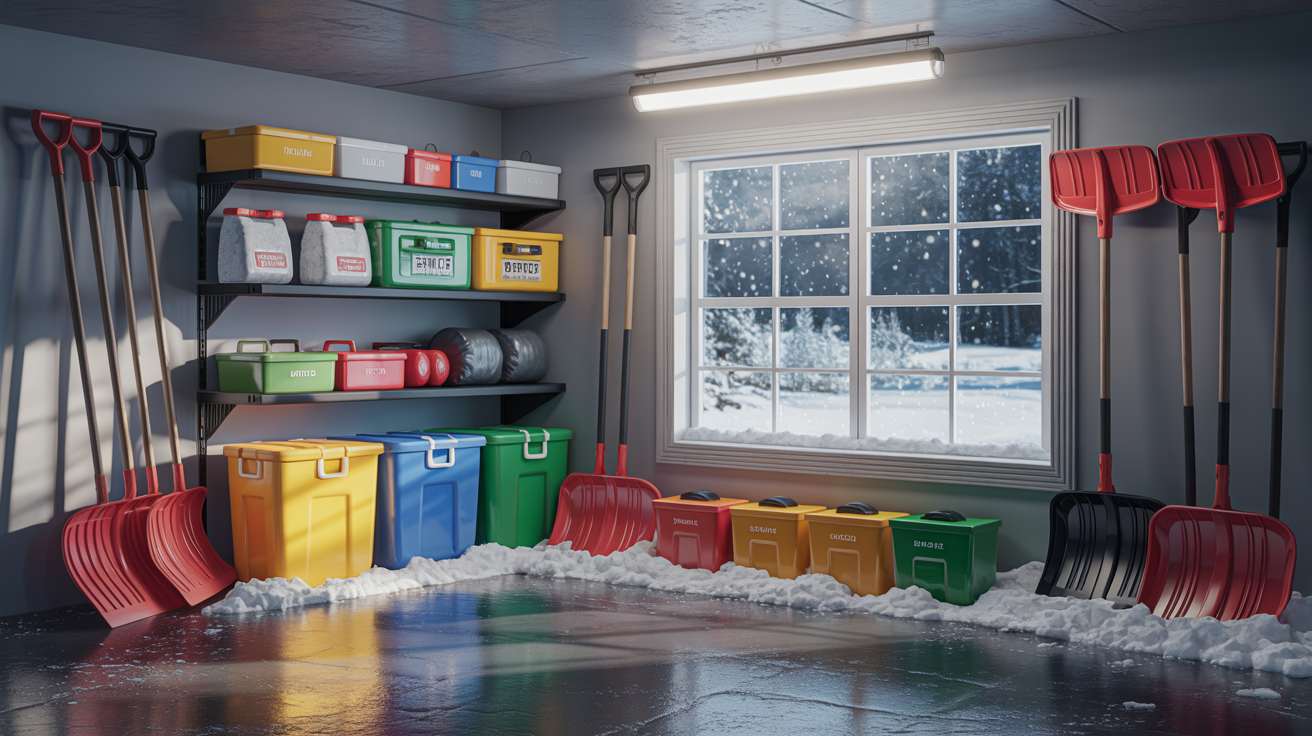
Essential winter items must be accessible:
- Snow shovels and ice scrapers
- Rock salt and ice melt
- Emergency generator
- Snow blower
- Emergency supplies (flashlights, batteries, radio)
- Extension cords
- Backup heating sources
Current reality for most people: These items are buried behind months or years of clutter.
What's Actually Taking Up Your Garage Space
Typical garage clutter:
- Broken lawn mowers and garden equipment (30% of space)
- Empty boxes "saved for moving" (15% of space)
- Duplicate tools and supplies (20% of space)
- Old paint, chemicals, and building materials (15% of space)
- Seasonal items from different homes/eras (10% of space)
- "Might fix it someday" items (10% of space)
Translation:** **60-70% of garage space is unusable junk.
What Should Go Before Winter
#### Lawn Equipment Category
✅ Remove:
- Broken or unrepairable lawn mowers
- Rusted or bent garden tools
- Empty gas cans (keep 1-2 full for generator)
- Dried-out hoses beyond repair
- Broken sprinklers and irrigation parts
✅ Keep & Organize:
- Working mower (properly winterized)
- 1-2 gas cans (treated fuel)
- Essential garden tools (cleaned, hung)
#### Chemical & Materials Category
✅ Remove:
- Paint cans from projects completed 3+ years ago
- Dried-out or separated paint
- Partial bags of concrete (hardened)
- Opened chemical containers (dried/expired)
- Partial fertilizer bags (likely degraded)
✅ Keep & Organize:
- Working paint (recent, sealed)
- Winter-specific chemicals (ice melt, de-icer)
- New, sealed bags of materials
#### Automotive Category
✅ Remove:
- Parts for vehicles you no longer own
- Old tires (unless studded for winter)
- Broken or rusted jacks and stands
- Used oil containers older than 1 year
- Duplicate automotive tools
✅ Keep & Organize:
- Current vehicle emergency kit
- Working jumper cables
- Ice scraper and brush for each vehicle
- Winter wiper fluid (lots of it)
#### Storage & Organization Category
✅ Remove:
- Empty cardboard boxes
- Broken shelving units
- Rusted storage containers
- Duplicate bins and totes
✅ Keep & Organize:
- Sturdy shelving (wall-mounted)
- Labeled, stackable storage bins
- Overhead racks for seasonal items
The Winter-Ready Garage Layout
Zone 1: Immediate Access (by door)
- Snow removal tools
- Ice melt and salt
- Vehicle emergency supplies
- Flashlights and batteries
Zone 2: Vehicle Parking (primary space)
- Clear, open area
- BOTH cars should fit (even if it's been years)
- Easy access to driver/passenger doors
Zone 3: Seasonal Storage (back wall/overhead)
- Properly stored lawn equipment
- Summer sports gear
- Holiday decorations
- Camping equipment
Zone 4: Workshop/Project Area (side wall)
- Organized tools on pegboard or shelving
- Workbench if space allows
- Labeled supply storage
Key principle:** **If you need it in winter, you should be able to grab it in under 30 seconds—even in the dark.
Basement Preparation for Winter Emergencies
Why Basements Matter in Winter
Cleveland winter basement issues:
- **Flooding from snow melt:** Affects 1 in 4 homes annually
- **Power outage refuge:** Warmest area during heating loss
- **Emergency supply storage:** Dry, accessible year-round
- **Generator placement:** Safe indoor running with proper ventilation
What to Clear from Basements Before Winter
#### Flood Risk Management
Remove from basement floor:
- Cardboard boxes (absorb water, deteriorate)
- Unsealed storage (mildew risk)
- Porous materials in contact with floor
- Anything that can't get wet
Elevate or relocate:
- Important documents (move upstairs)
- Photos and memorabilia (off-floor storage)
- Electronics and equipment (raise 6+ inches)
- Emergency supplies (accessible, elevated location)
#### Water Damage Items
If your basement has ever flooded, remove:
- Water-damaged furniture
- Moldy or mildewed items
- Carpet/rugs with water exposure
- Drywall or insulation with water damage
Why: These items harbor mold spores that worsen in winter humidity. They're health hazards and reduce air quality when you're trapped indoors during storms.
#### Creating Emergency Space
Clear a designated area for:
- Generator operation (with proper CO protection)
- Emergency heating backup
- Food and water supply storage
- Family refuge space during power loss
Space requirements: Minimum 100 square feet cleared and organized
The Winter-Ready Basement Layout
Zone 1: Emergency Supplies
- 3-day water supply (1 gallon per person per day)
- Non-perishable food
- First aid kit
- Battery-powered radio
- Flashlights and batteries (multiple)
- Blankets and warm clothing
- Phone chargers and power banks
Zone 2: Heating Backup
- Generator (if indoor-safe model with CO detector)
- Space heater (electric, for generator power)
- Extra fuel (properly stored)
- Extension cords and power strips
Zone 3: Regular Storage
- Elevated, organized seasonal items
- Labeled bins on shelving
- Clear aisles for access
Key principle: In a power outage at night, you should be able to find essentials without a flashlight (because you'll need the flashlight to look for everything else).
Winter Emergency Supplies Checklist
The Basic 72-Hour Kit
According to FEMA and Ohio EMA, every household should maintain:
Water & Food:
- 1 gallon water per person per day (minimum 3 days)
- Non-perishable food (3-day supply)
- Manual can opener
- Paper plates and utensils
Light & Communication:
- Flashlights (1 per family member)
- Extra batteries (multiple sets)
- Battery or hand-crank radio (NOAA weather)
- Cell phone chargers (battery packs + car chargers)
Warmth:
- Extra blankets and sleeping bags
- Warm clothing layers
- Hand/foot warmers (chemical packs)
- Emergency candles (with safe holders)
Tools & Supplies:
- First aid kit (stocked and current)
- Medications (1-week supply minimum)
- Whistle (for signaling)
- Dust masks
- Moist towelettes and garbage bags
- Wrench/pliers (for utilities)
- Local maps
Special Needs:
- Infant formula/diapers
- Pet food and supplies
- Prescription medications
- Medical equipment batteries
The Cleveland-Specific Additions
For lake effect snow:
- Extra snow shovels (in case one breaks)
- Roof rake (for heavy snow)
- Sidewalk salt/ice melt (50-100 lbs)
- Kitty litter or sand (traction on ice)
For power outages:
- Generator (properly sized for essentials)
- Generator fuel (treated, rotated annually)
- CO detector (battery backup)
- Extension cords (outdoor-rated, proper gauge)
For vehicle emergencies:
- Emergency kit for each vehicle
- Tow strap or chain
- Jumper cables (heavy duty)
- Ice scraper and snow brush
- Extra wiper fluid (winter formula)
- Warm blankets and gloves
- High-calorie snacks
- Road flares or reflectors
Can You Access All of This Right Now?
Be honest:
- Do you know where your flashlights are?
- Are the batteries fresh?
- Can you reach your generator in under 5 minutes?
- Is your snow shovel accessible or buried?
- Do you have 3 days of water stored?
If you answered "no" to any of these, you're not winter-ready.
Real Winter Emergency Stories
The Patterson Family, North Olmsted:
*"Last February, we had a power outage during a blizzard. Lasted 14 hours. We couldn't find our generator because the garage was too full—it was buried in the back corner behind years of junk. We ended up at my sister's house with the kids. After that, we called Barna's in November, cleared out the entire garage, and organized everything properly. This year, when we had an ice storm, we had the generator running in 10 minutes. Totally worth it."*
---
Mark, Lakewood:
*"I'm a contractor, so I should know better. But my basement flooded during spring thaw and ruined probably $2,000 worth of stuff I had stored down there—tools, supplies, equipment. All because it was sitting on the floor in cardboard boxes. Barna's helped me clear out all the damaged stuff in November, and we reorganized everything on shelving. Haven't had an issue since."*
---
Linda, Parma Heights:
*"I'm 68 and live alone. Last winter, I couldn't get my car out of the garage to go to a doctor's appointment because I couldn't reach my snow shovel—it was behind a bunch of boxes and old furniture. I was literally snowed in my own garage. Called my son, he called Barna's, they came out in November and cleared everything. Now I can get to everything I need. Makes me feel safer knowing I'm prepared."*
How to Get Winter-Ready (This Week)
Day 1: Assessment
- Walk through garage and basement
- Identify winter equipment locations
- List items blocking access
- Note items that need removal
Day 2: Planning
- Call Barna's for estimate: **(440) 915-2813**
- Schedule removal appointment
- Order any missing emergency supplies
- Check generator functionality
Day 3: Preparation
- Clear pathways for removal crew
- Separate keep vs. remove items
- Photograph spaces for "before" records
- Check emergency supply expiration dates
Day 4: Removal Day
- Barna's arrives and removes clutter
- Space is cleared in 1-3 hours
- Immediate access to winter equipment
- Clean slate for organization
Day 5: Organization
- Install shelving/storage systems
- Organize remaining items by season/use
- Label everything clearly
- Create emergency supply zone
Day 6: Testing
- Test generator with full load
- Locate all winter tools
- Practice emergency protocols
- Update emergency contact lists
Day 7: Maintenance
- Photograph organized spaces
- Create inventory list
- Set calendar reminders for supply checks
- Enjoy peace of mind
Total time investment: 7 days (mostly planning)
Physical work: Mostly handled by Barna's
Result: Fully winter-ready home
Pricing for Winter Preparation Services
Standard Garage Cleanouts
- **Single-car garage clear out:** $200-400
- **Two-car garage clear out:** $350-650
- **Attached shed/storage:** $100-250 additional
Basement Cleanouts
- **Partial basement (emergency zone):** $150-300
- **Full basement cleanout:** $400-900
- **Water-damaged item removal:** Quoted separately (disposal requirements)
Bundle Services (Save 15-20%)
- **Garage + Basement:** $500-1,100
- **Complete winter prep (garage + basement + organization assistance):** Custom quote
Average winter preparation investment: $400-700
ROI Analysis
One-time investment: $400-700
Avoided costs: Emergency services, repairs, injuries, damaged property
Peace of mind: Priceless
Family safety:** **Absolutely priceless
Book Your Winter Preparation Service
Weather windows close fast in Northeast Ohio. Once snow starts, preparing becomes exponentially harder.
Call or Text: (440) 915-2813
Email: [email protected]
📅 Mention "Winter Prep" for priority scheduling
Same/Next-Day Service Available
Registered & Insured
Emergency Equipment Access Guaranteed
Serving Greater Cleveland & Berea
Don't wait until the first snowstorm to discover you're unprepared. Get winter-ready this week—while it's still easy.
Your future self (shivering in the dark looking for a flashlight) will thank you.